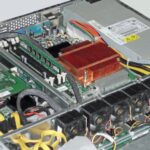
Photo: Winston Chen / Unsplash. License: Unsplash License.
Quick Answer: ERCOT’s provisional Batch Zero classification, dated September 3, 2026, sorted 735 large electric loads into three groups: 204 base load projects totaling 66.4 gigawatts, 158 studied load projects of roughly 125 to 128 gigawatts, and 373 excluded projects totaling 302.2 gigawatts. Under rules written to carry out Senate Bill 6, a large load of 75 megawatts or more must now pay a $100,000 study fee and post $50,000 per megawatt in financial security before it is studied. A state audit of the projects is due December 10, 2026.
Artificial intelligence runs on electricity, and in Texas the paperwork for that electricity has become one of the most closely watched data sets in the state. The Electric Reliability Council of Texas (ERCOT), which operates the grid serving most of the state, has spent 2026 replacing an open-ended waiting list for large power users with a batch study process, while the Public Utility Commission of Texas (PUCT) has finished the rule that tells data center developers how much money they must put up to hold a place in line.
How big is the ERCOT large-load queue in 2026?
The headline figure has moved quickly. In early April 2026, ERCOT’s chief executive told lawmakers the grid operator was tracking large-project requests totaling about 410,000 megawatts, roughly 87 percent of them data centers, according to Community Impact’s report on the testimony. By late May, a presentation to the ERCOT board put large-load interconnection requests at about 438 gigawatts, up roughly 28 gigawatts since the April board meeting, according to New Project Media. More than 300 gigawatts of that total had no studies submitted at all.
By August, Governor Greg Abbott’s letter to the PUCT and ERCOT described a queue of about 474 gigawatts, about 90 percent of it data centers, according to Utility Dive. For scale, ERCOT’s all-time peak demand record is 85,508 megawatts, set on August 10, 2023, according to ERCOT. The August queue figure was therefore more than five times the highest demand the grid has ever served.
Why do ERCOT officials caution against reading the queue as a forecast?
A request in the queue is not a building. New Project Media reported that ERCOT’s vice president of interconnection and grid analysis told the board that many requests carried only a megawatt amount, a timing estimate and a basic location, that some lacked a confirmed point of interconnection, and that some may be speculative while others were waiting on transmission-provider study backlogs. That uncertainty is the problem Senate Bill 6 and the new batch process were built to address.
What does ERCOT’s long-term load forecast say?
Senate Bill 6 also changed how Texas forecasts demand. On April 15, 2026, ERCOT filed a preliminary Long-Term Load Forecast for 2026 through 2032 with the PUCT in Project 58777, in compliance with requirements the Legislature set. The filing projected approximately 367,790 megawatts of demand in the ERCOT region by 2032. That is about 4.3 times the 85,508-megawatt record.
ERCOT was direct about the limits of the number. Its news release called the forecast a preliminary snapshot that informs transmission planning and resource adequacy reporting, not a prediction of what will be built, and said ERCOT believes the forecast is higher than expected future load growth. The forecast combines ERCOT’s base economic forecast with information that transmission and distribution companies provide about medium load customers, defined as 25 megawatts to 74.9 megawatts, and large load customers of 75 megawatts and above.
How much of the forecast is data centers?
Nearly all of the utility-reported growth. Community Impact reported that transmission and distribution providers submitted nearly 243,000 megawatts of potential large-load projects through 2032, and that more than 228,000 megawatts of that was data centers. That works out to about 94 percent. Dallas-based Oncor submitted more than 109,000 megawatts inside its boundaries, significantly more than other utilities, and AEP submitted more than 42,000 megawatts in its service area, according to the same report.
The near-term picture was far more modest. The preliminary forecast implied a summer 2026 peak of about 112,000 megawatts, but ERCOT said a more realistic summer peak was 90,500 to 98,000 megawatts, Community Impact reported. At its April 17 open meeting, the PUCT agreed to work with ERCOT to refine the data before it is used for grid reliability and transmission planning, and ERCOT said it planned to issue a revised forecast.
What does Senate Bill 6 require of large electricity users?
Senate Bill 6 passed the Legislature on May 29, 2025, and Governor Abbott signed it on June 20, 2025, with immediate effect, according to an analysis published by the National Law Review. The law added Section 37.0561 to the Public Utility Regulatory Act to protect retail ratepayers from stranded transmission costs tied to the influx of data centers, according to White and Case. Its main provisions, as summarized in the National Law Review analysis, include:
- A 75-megawatt threshold. The interconnection standards apply to large loads of 75 megawatts or more at a single site, and the PUCT may lower that threshold.
- A screening study fee. An initial transmission screening study fee of at least $100,000 per request.
- Backup generation disclosure. A customer must disclose whether on-site backup generation equals or exceeds half of the proposed load and cannot export to the grid. ERCOT may direct customers with qualifying backup generation to deploy it or curtail load around an energy emergency.
- Curtailment equipment. Large loads interconnected after December 31, 2025 must install equipment that lets ERCOT directly curtail them during firm load shed events, with exceptions for critical load industrial customers and critical natural gas facilities.
- Review of co-location deals. Net metering arrangements between existing power plants and co-located large loads require an ERCOT study within 120 days of notice and a PUCT decision within 60 days of receiving that study.
What did the PUCT’s final rule add in September 2026?
The PUCT developed its standards under Project No. 58481, filed a proposed rule in March 2026 and issued the final rule on September 18, 2026, according to White and Case. The firm’s summary describes several changes from the proposal. A non-refundable interconnection fee of $50,000 per megawatt was dropped in favor of size-tiered study charges paired with an initial flat $100,000 fee. The $50,000 per megawatt instead became financial security that the customer posts.
Under the adopted rule, a customer signs an intermediate agreement before any study, pays the $100,000 study fee, submits officer-attested technical disclosures and posts security of $50,000 per megawatt of requested peak demand. By simple arithmetic, that is $3.75 million for a 75-megawatt request and $50 million for a 1,000-megawatt campus. After transmission capacity is allocated, the customer signs a Standard Large Load Interconnection Agreement and posts security equal to the greater of $50,000 per megawatt of contracted peak demand or its allocated transmission upgrade costs.
| Rule element | What the September 18, 2026 rule provides (per White and Case) |
|---|---|
| Study fee | Flat $100,000 initial fee plus size-tiered study charges |
| Security before study | $50,000 per MW of requested peak demand |
| Security at final agreement | Greater of $50,000 per MW of contracted peak demand or allocated transmission upgrade costs |
| Return of security | 20 percent at initial energization; remaining 80 percent in 20 percent increments as billing milestones are met |
| Withdrawal before study | 100 percent returned, less amounts owed to the utility |
| Withdrawal after capacity is allocated | 20 percent of security tied to allocated capacity is forfeited |
| Grace period | 24 months past the scheduled energization date before the utility reports unused capacity to ERCOT |
Does on-site generation reduce what a data center must post?
No. White and Case reports that the PUCT required security to be calculated on gross contracted peak demand and denied requests to exempt co-located generation or to base collateral on net grid imports. The commission also declined to write industry-specific carve-outs. The rule is not limited to data centers; it also captures other large users such as hydrogen producers, industrial metal manufacturers and petroleum facilities.
What is Batch Zero and where does it stand?
Batch Zero is ERCOT’s first group study of large loads, created under Planning Guide Revision Request 145 to replace project-by-project review. According to ERCOT’s September 2026 board update, the earlier large-load study process sunset on July 10, 2026, and Batch Zero submission packages were due July 24, 2026. Butler Snow noted that most large loads had to post $50,000 per megawatt of security by that date to be included.
On August 3, 2026, the governor directed the PUCT and ERCOT to audit data centers before approving interconnections, and ERCOT issued a market notice pausing the study and delaying classification. The PUCT granted ERCOT good cause exceptions on August 20. ERCOT then sent provisional, conditional classifications to transmission providers on September 3, 2026.
| Batch Zero category (provisional, September 3, 2026) | Projects | Capacity |
|---|---|---|
| Base load | 204 | 66.4 GW |
| Studied load | 158 | 125.4 GW in ERCOT’s chart; 127.9 GW in its key takeaways |
| Excluded | 373 | 302.2 GW |
| Total classified | 735 | 362 projects included, 373 excluded |
The split is the most useful single data point in the Texas data center debate. Of 735 classified projects, 362 made it into the base or studied categories, and nine of those were conditionally included subject to a future good cause exception, according to ERCOT’s board update. The 373 excluded projects account for 302.2 gigawatts, more than the two included categories combined, which total roughly 192 to 194 gigawatts depending on which ERCOT figure for studied load is used.
What happens on December 10, 2026?
ERCOT’s Batch Zero Eligibility Verification Report and its Community Impact Review Report are both due to the PUCT on December 10, 2026, ahead of a commission open meeting on December 17, according to ERCOT’s presentation to the commission. ERCOT planned to send requests for information to provisionally qualified projects in August and September, gather more in October and November, and give developers a chance to cure inconsistencies. A final inclusion or exclusion determination is slated for December 2026.
Projects close to switching on are affected as well. ERCOT told the commission that 17 large loads with 6,608 megawatts of total peak demand over five years had finished all other ERCOT processes but lacked energization approval. Utility Dive reported that ERCOT will not complete the Batch Zero study by the original April 9, 2027 date and that a new timeline is being worked out.
Brian’s Take
I spent years as an investment manager and analyst, and the first thing I look for in any big number is how much of it is backed by a signed commitment. The Texas queue figures of 438 and 474 gigawatts never passed that test, and ERCOT’s own staff said so. What I find far more useful is the September classification. When 373 of 735 projects, carrying 302.2 gigawatts, land in the excluded pile once real requirements apply, that tells me the filter is doing its job.
The $50,000 per megawatt security requirement reads to me like a seriousness test, not a toll. Fifty million dollars for a 1,000-megawatt campus is meaningful money, but it is refundable in stages for a project that actually energizes and pays its bills. A developer with a customer, a site and equipment on order can live with that. A developer holding a queue position as an option cannot, and that is the point.
What I would watch is the calendar, not the gigawatts. The December 10 audit reports, the December 17 commission meeting and the still-undetermined Batch Zero study date will decide when verified projects can plan around firm power. For Texas businesses that sell into this buildout, clarity on timing matters more than the size of any forecast.
Frequently Asked Questions
How much must a data center pay to enter the Texas interconnection process?
Under the PUCT rule issued September 18, 2026, a customer pays a $100,000 study fee plus size-tiered study charges and posts financial security of $50,000 per megawatt of requested peak demand before the interconnection study, according to White and Case.
How many projects did ERCOT include in Batch Zero?
ERCOT’s provisional classification of September 3, 2026 included 362 large loads: 204 as base load at 66.4 gigawatts and 158 as studied load at roughly 125 to 128 gigawatts. Another 373 projects totaling 302.2 gigawatts were excluded.
Will Texas electricity demand really reach 367,790 megawatts by 2032?
ERCOT itself does not expect so. It called the April 2026 figure a preliminary snapshot, not a prediction of what will be built, and said it believes the forecast is higher than expected future load growth. The PUCT agreed to work with ERCOT to refine it.
Can ERCOT cut power to a data center during a grid emergency?
Under Senate Bill 6, large loads interconnected after December 31, 2025 must install equipment allowing ERCOT to curtail them directly during firm load shed events, with exceptions for critical load industrial customers and critical natural gas facilities, according to the National Law Review analysis.
Sources and Further Reading
- Batch Zero Update, Item 14, Board of Directors meeting, September 14-15, 2026 – Electric Reliability Council of Texas (ERCOT)
- Batch Zero Verification and Audit, presentation to the Public Utility Commission of Texas, August 20, 2026 – ERCOT
- ERCOT Releases Preliminary Long-Term Load Forecast for 2026-2032, news release, April 15, 2026 – ERCOT
- PUCT Sets Financial Commitments for Data Center Interconnection as Governor Pauses Permit Approvals, September 25, 2026 – White and Case LLP
- Texas Senate Bill 6 Ushers Major Overhaul of Large Load Interconnection and Grid – The National Law Review
- Recent Developments in Texas Data Center Interconnections and the ERCOT Batch Zero Process, August 4, 2026 – Butler Snow LLP
- ERCOT Forecasts Quadruple Growth in Electric Demand, Warns Estimate Is Likely Overinflated, April 22, 2026 – Community Impact
- ERCOT audit of Texas data center proposals, August 21, 2026 – Utility Dive
- ERCOT Large-Load Requests Climb to 438 GW, June 23, 2026 – New Project Media